
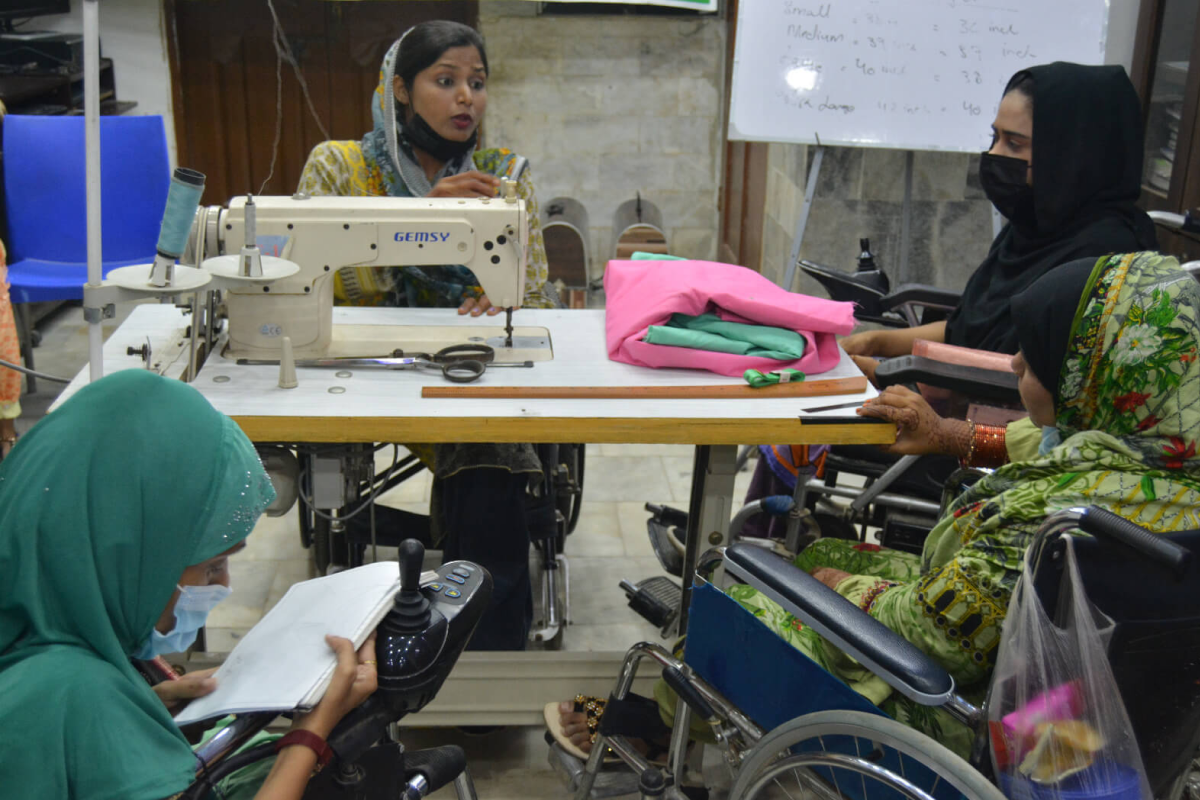
Daily Living Skills for Disabled Persons
Introduction
Everyday activities help people with impairments become more independent. A key component of well-being is the capacity to make decisions, manage personal routines, and navigate daily life with assurance. Daily living skills for disabled people are the cornerstone of self-sufficiency and significant social involvement.
Daily living skills are seen as more than just simple duties at the Pakistan Independent Living Center. They are viewed as instruments of self-determination, dignity, and choice. People become less dependent on others and have more control over their lives when they are assisted in developing these abilities. This procedure is further strengthened by the careful application of accessible technology PWD solutions in addition to training and assistance.
What Are Daily Living Skills?
The practical skills needed to manage daily life are referred to as daily living skills. These abilities enable people to take care of themselves, control their environment, and interact with their communities. Daily living skills for people with disabilities are influenced by their individual requirements, physical capabilities, and the support networks that are available to them.
Personal hygiene, clothing, meal preparation, domestic chores, money handling, communication, mobility, and time management are important aspects of daily living skills for people with disabilities. These abilities also include self-advocacy, decision-making, and social engagement.
Daily life skills are developed based on personal objectives rather than a predetermined model. While one individual would prioritize communication or safe movement, another might concentrate on cooking and housekeeping. This tailored method guarantees that education stays applicable.
Importance of Independence
Doing everything by yourself is not the definition of independence. It is characterized by the capacity to make decisions and manage one’s own life. By lowering needless reliance and boosting self-assurance, everyday living skills for people with disabilities promote this freedom.
Strong daily living skills lead to increased routine stability and enhanced self-esteem. A sense of control and self-worth can be developed through simple tasks like cooking or taking care of oneself.
Additionally, these abilities lessen the strain on caregivers and families. Support becomes cooperative and courteous rather than one-sided. Everyone’s relationships and emotional health improve as a result of this change.
Daily living skills are crucial for education, work, and community involvement from the standpoint of independent living. Regardless of aptitude or drive, access to chances is still restricted without them.
Daily Living Skills and Social Participation
Daily living abilities also affect how people engage with their environment. People with disabilities can participate in social events and community life with the aid of skills like communication, personal organization, and transportation planning.
When people feel comfortable with everyday routines, they can participate in neighborhood events, educational initiatives, or professional settings. This visibility promotes inclusive attitudes in society and dispels misconceptions. Community participation and daily living skills training are intimately related to the Pakistan Independent Living Center. Learning through experience is reinforced by encouraging people to use newly acquired abilities in practical situations.
Role of Accessible Technology
Although the foundation of freedom is human talents, technology can offer crucial assistance. Accessible technology PWD solutions for people with disabilities assist in removing obstacles that restrict their ability to participate and be independent in daily life.
Tools and gadgets that facilitate movement, communication, education, and environmental control are examples of accessible technology PWD. Instead of taking the role of talents, these solutions facilitate their practical use.
For instance, customized kitchen tools help with meal preparation, while communication devices help people with speech problems. Budgeting, navigation, and reminders are all aided by mobile applications. Accessible technology promotes independence without fostering dependency when used carefully.
How Accessible Technology Supports Daily Living Skills
Technology that is accessible PWD solutions enable people to carry out duties effectively and safely. Movement in homes and communities is facilitated by mobility aids. Clearer communication with others is made possible by assistive communication tools. Environmental controls enable people to autonomously regulate appliances, doors, and lighting.
Additionally, technology facilitates learning. People can practice everyday life skills at their own pace with the help of voice-assisted tools, visual assistance, and personalized interfaces. For people with cognitive or sensory impairments, this adaptability is particularly crucial.
The Pakistan Independent Living Center places a strong emphasis on integrating technology with individual requirements. Technology is only implemented when it respects personal preference and adds value. Training guarantees that people can confidently and comfortably use these technologies.
Tools and Practical Examples
Practical tools and real-world applications help impaired people improve their everyday living abilities. Typical instances include the following:
modified home appliances for personal hygiene, cleaning, and cooking.
mobility devices that make it possible to move safely both inside and outside of dwellings.
tools for communication that facilitate understanding and expression.
digital tools for financial tracking, scheduling, and reminders.
Technology that is accessible Workplaces and educational settings are also supported by PWD solutions. Voice-input devices, adaptable keyboards, and screen readers enable people to work effectively and independently.
These tools work best when used in conjunction with continuing assistance and training. While technology by itself cannot foster independence, it can be a potent support system when combined with everyday living skills.
Building Confidence Through Skill Development
People become more confident when they observe improvements in their regular activities. Over time, mastering minor tasks leads to greater accomplishments. Training in daily living skills emphasizes slow progress over rapid outcomes.
People are encouraged to create reasonable goals and monitor their progress at the Pakistan Independent Living Center. This strategy strengthens a sense of accomplishment and increases drive.
Technology that is accessible PWD solutions lessen physical strain and frustration, which boosts confidence even more. People are more inclined to attempt new things and grow more independent when tasks become manageable.
Long-Term Impact on Quality of Life
Long-term stability and well-being are influenced by having strong everyday living skills. People who successfully manage their routines report better mental health, lower levels of stress, and increased life satisfaction.
Long-term planning is also aided by these abilities. Communication skills, healthcare coordination, and money management all help people get ready for future demands. Instead of being transient, independence becomes permanent.
Additionally, communities gain. Social inclusion rises and support networks become more accommodating and courteous when disabled people actively engage.
Conclusion
For disabled people to be independent, dignified, and involved, daily living skills are crucial. They enable people to confidently participate in their communities, manage daily routines, and make educated decisions.
These abilities become more robust and long-lasting when they are backed by careful instruction and accessible technology PWD solutions. Daily living skills are seen as the cornerstone of independent living at the Pakistan Independent Living Center, allowing people to live self-directed lives based on respect and confidence.