
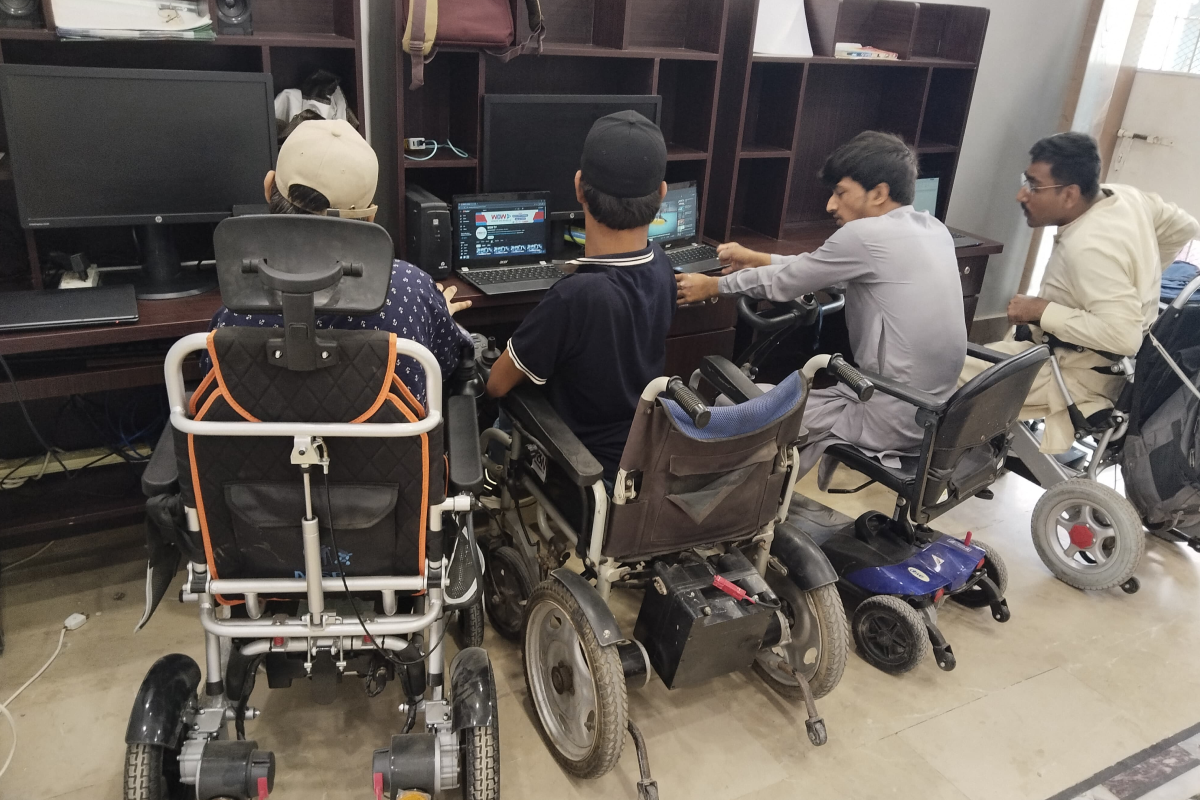
Community Inclusion Disability: How Technology Is Enabling Independent Living
Introduction
Community inclusion disability is about ensuring that persons with disabilities (PWDs) can participate fully in social, economic, and community life without barriers. Inclusion is not limited to access; it is about dignity, independence, and equal opportunity. In Pakistan, many PWDs still face exclusion due to physical, social, and technological limitations.
Today, independent living technology is transforming how people with disabilities interact with their environment. From assistive mobile apps to smart home devices, technology is becoming a powerful tool for inclusion. NGOs are playing a critical role by bridging the gap between innovation and accessibility, helping PWDs live more independent and socially connected lives.
Meaning of Community Inclusion for Disability
Community inclusion means that persons with disabilities are able to live, work, learn, and socialize within their communities just like everyone else. It focuses on participation rather than isolation.
Key elements of community inclusion disability include:
- Equal access to education and employment
- Participation in social and cultural activities
- Freedom of movement within public spaces
- Independent decision-making
- Respect and acceptance within society
Inclusion is not achieved through charity alone. It requires systemic support, accessible environments, and tools that allow PWDs to function independently; this is where independent living technology becomes essential.
Challenges Faced by Persons with Disabilities in Daily Life
PWDs in Pakistan encounter multiple challenges that limit their independence and social participation. These challenges vary by disability type but often include:
- Limited mobility due to inaccessible infrastructure
- Communication barriers for hearing- and speech-impaired individuals
- Lack of accessible information for visually impaired persons
- Dependence on caregivers for daily tasks
- Social stigma and exclusion
These challenges directly impact community inclusion for disability, making it difficult for PWDs to engage in education, employment, and social activities. Without proper support systems, many individuals remain isolated despite having the potential to live independently.
Role of Technology in Independent Living
Technology has emerged as a key enabler of independence for persons with disabilities. Independent living technology empowers PWDs to perform daily tasks, communicate effectively, and navigate their surroundings with confidence.
Technology supports inclusion by:
- Reducing reliance on caregivers
- Enhancing mobility and communication
- Improving safety and accessibility
- Enabling remote education and employment
- Supporting decision-making and self-management
When combined with NGO support, technology becomes a practical solution that directly contributes to community inclusion for disability.
Assistive Apps Supporting Daily Independence
Mobile applications have significantly improved accessibility for PWDs. Many assistive apps are affordable, easy to use, and adaptable to different needs.
Examples include:
- Screen reader apps for visually impaired users
- Speech-to-text and text-to-speech apps
- Sign language translation tools
- Navigation apps with audio guidance
- Reminder apps for medication and daily routines
These apps allow individuals to communicate, travel, and manage daily activities independently. NGOs often provide training on how to use such tools effectively, ensuring that independent living technology reaches those who need it most.
Smart Devices and Home Automation
Smart home technology is another important component of independent living. Devices controlled through voice commands or mobile apps help PWDs manage their living environment safely and comfortably.
Common examples include:
- Voice-controlled lights and appliances
- Smart door locks and security systems
- Automated temperature control
- Emergency alert systems
- Smart assistants for reminders and communication
By reducing physical effort and improving safety, smart devices strengthen community inclusion for people with disabilities by allowing them to live independently within their homes.
Mobility Technology and Assistive Equipment
Mobility is central to independence and social participation. Advances in mobility technology have greatly improved access for persons with physical disabilities.
Examples of mobility-focused independent living technology include:
- Powered and smart wheelchairs
- GPS-enabled mobility devices
- Prosthetics with adaptive controls
- Accessible public transport apps
- Obstacle-detection devices for visually impaired users
NGOs often partner with technology providers to distribute and maintain these tools, ensuring that mobility challenges do not prevent community participation.
NGO Initiatives Providing Access to Technology
Many NGOs in Pakistan actively promote community inclusion of disability by making assistive technology accessible to underserved populations. Their initiatives include:
- Needs assessments to identify suitable technologies
- Subsidized or donated assistive devices
- Digital literacy and technology training
- Partnerships with tech companies and donors
- Ongoing technical support and maintenance
NGOs ensure that independent living technology is not limited to urban or high-income groups but reaches rural and marginalized communities as well.
Training and Digital Literacy Support
Technology alone is not enough; users must be confident and skilled in using it. NGOs provide training programs that focus on:
- Basic smartphone and computer usage
- Use of assistive apps and devices
- Online safety and privacy
- Remote communication tools
- Digital employment readiness
These programs empower PWDs to integrate technology into their daily routines, strengthening independence and reinforcing community inclusion for disability.
Impact on Independence and Social Participation
The use of independent living technology has a measurable impact on the lives of persons with disabilities. Key outcomes include:
- Increased self-reliance in daily activities
- Improved access to education and employment
- Greater participation in family and community life
- Enhanced confidence and mental well-being
- Reduced social isolation
PWDs who have access to technology are more likely to engage in community events, pursue careers, and advocate for their rights. This shift benefits not only individuals but society as a whole.
Broader Social Benefits of Inclusive Technology
When communities invest in inclusion-focused technology, the benefits extend beyond PWDs. Inclusive design improves usability for everyone, including the elderly and people with temporary impairments.
Benefits include:
- More inclusive public spaces
- Increased workforce diversity
- Reduced dependency on welfare systems
- Stronger social cohesion
- Economic participation of marginalized groups
By supporting community inclusion of disability, technology becomes a driver of sustainable development and social equity.
Conclusion
Community inclusion disability is not possible without independence, dignity, and access to opportunity. Independent living technology has become a powerful tool in removing barriers that have historically excluded persons with disabilities from full participation in society.
Through assistive apps, smart devices, and mobility technology supported by NGO initiatives, PWDs in Pakistan are gaining greater control over their lives. Continued investment in accessible technology, training, and inclusive policies will ensure that independence and inclusion become a reality for all.